
Buying Guides
Cotton vs Performance Shirts: Which Fits Your Day?
Jul
Choosing between cotton vs performance shirts is less about finding one universal winner and more about matching a specific shirt to the way you plan to wear it. Cotton fibers have well-documented baseline qualities, while polyester, cotton-poly blends, and named moisture-management technologies bring a different set of considerations. The useful details live in the exact style, color, composition, and technology—not in a broad label by itself.
This guide translates manufacturer and textile-industry information into a practical shopping process. It keeps fiber-level guidance separate from finished-garment claims, so you can compare options without assuming that every cotton shirt or every performance-oriented shirt behaves the same way.
Quick answer: For casual, design-led wear, start with a cotton shirt if you value its soft, absorbent feel. For repeated sweating or faster drying, compare performance shirts with an explicitly documented fabric blend or moisture-management technology. Neither label alone tells you how a specific garment will feel; check the selected style and color.
Cotton vs Performance Shirts at a Glance
| What matters | Cotton shirt | Performance shirt |
|---|---|---|
| Everyday feel | Cotton fiber is naturally soft, breathable, and absorbent; the garment’s knit and fit still matter. | Feel depends on the exact synthetic fiber, blend, construction, and finish. |
| Sweat and drying | Conventional cotton absorbs moisture and may hold it longer; named treatments can change that behavior. | A documented polyester or moisture-management fabric may suit faster drying; confirm the actual product claim. |
| Composition | Some shirt models change fiber ratio by color. Read the selected variant’s label. | May be polyester, a cotton-poly blend, or another engineered fabric. A marketing label is not a specification. |
| Best first check | Compare fabric content, weight, cut, and care for the exact color. | Compare fabric content, technology claim, fit, and care for the exact style. |
These are decision prompts, not performance guarantees for every shirt. The examples and source links below show why style-specific details matter.
Cotton Shirts: What the Sources Support
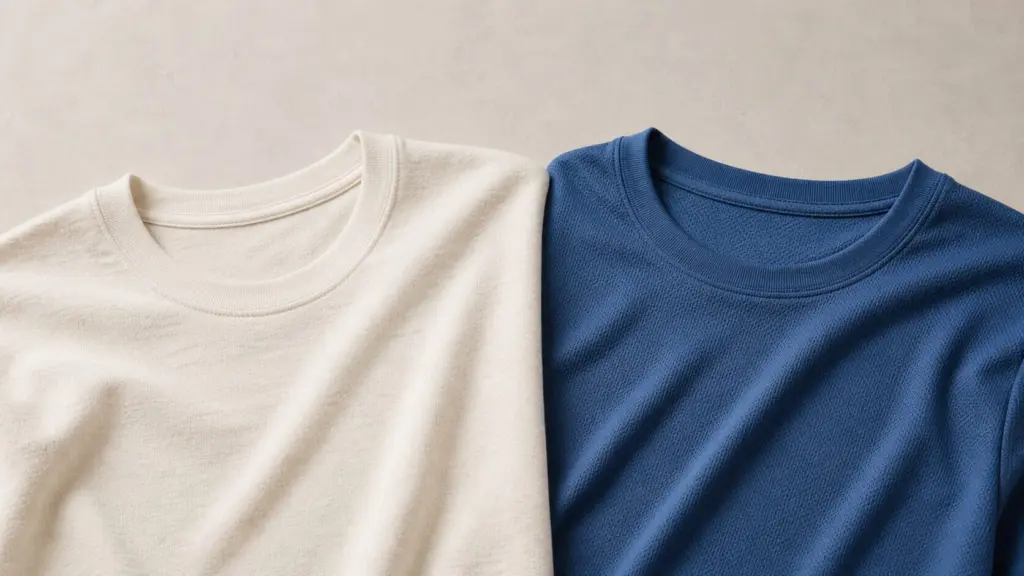
At the fiber level, CottonWorks describes cotton as naturally breathable, absorbent, and soft. Those qualities help explain why cotton is widely considered for everyday garments, but they do not guarantee that every finished shirt will feel or perform identically. Yarn, knit, fabric weight, finishing, garment construction, and color-specific composition can all affect the final result.
A manufacturer’s model page shows why those distinctions matter. Gildan identifies solid-color versions of its G5000 Heavy Cotton Adult T-Shirt as 100% U.S. cotton, while Sport Grey, Heather, Safety, and Ash variants use different cotton-polyester ratios. Even within one named style, selecting a different color can change the disclosed blend.
Breathability, Absorbency, and Softness
CottonWorks’ quality-assurance guidance supports three useful baseline points: cotton is naturally breathable, it absorbs moisture, and it is naturally soft. These are fiber-level properties that can inform a shopping decision. They should not be converted into a promise that every cotton garment will deliver the same comfort in every setting.
For an everyday graphic tee, softness and absorbency may be priorities because the shirt will be worn casually for long periods. The practical check is still the same: read the product description for the exact garment option, then compare its stated composition and construction with what matters to you.
Moisture Retention and Engineered Cotton
Absorbency has a tradeoff. CottonWorks reports that traditional cotton absorbs moisture rapidly and may retain more moisture than synthetics. That can matter when a shirt is used during sustained activity or when quick drying is a priority.
However, “cotton” is not one fixed performance outcome. CottonWorks’ page on TransDRY technology describes an engineered cotton treatment that changes moisture movement and drying behavior. The takeaway is not that every treated cotton fabric works the same way; it is that a named treatment can materially change the behavior of a cotton textile. Look for the technology to be explicitly identified before relying on a technology-specific statement.
Performance Shirts: What Changes
“Performance shirt” is a shopping label, not a universal fiber recipe. A performance-oriented garment may use polyester, a cotton-poly blend, or a specifically engineered textile. The reliable comparison starts with the composition and claims documented for the named style.
Polyester and Cotton-Poly Blends
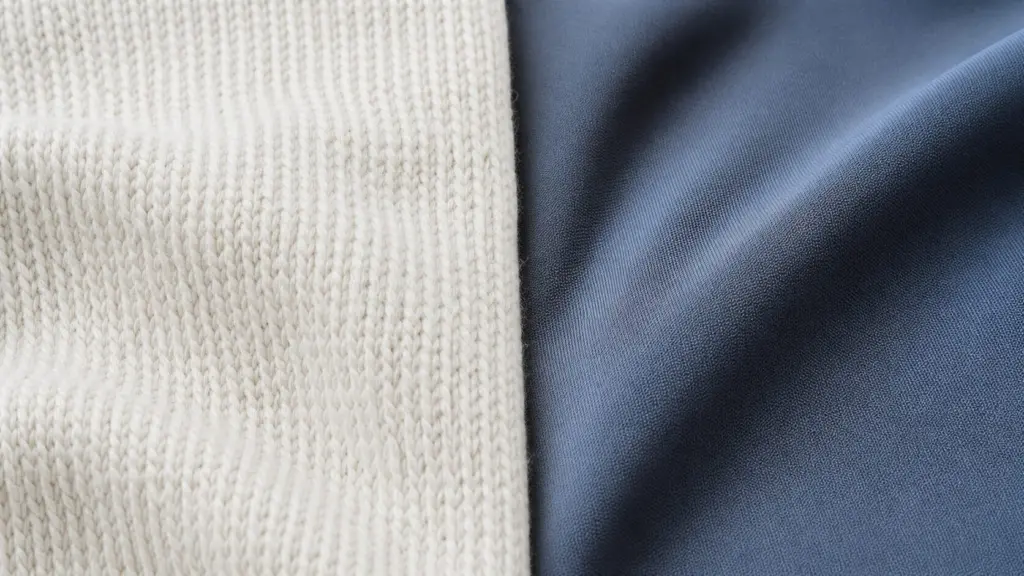
Patagonia’s polyester overview describes polyester as lightweight and quick-drying, and notes that it can be blended with cotton. The same source also discusses petroleum-related environmental tradeoffs associated with virgin polyester. A balanced comparison can account for both the functional description and the disclosed sourcing consideration.
A named blend provides a more concrete example. Gildan identifies its G8000 DryBlend as 50% U.S. cotton and 50% polyester, with moisture-wicking fabric intended for active use. Those details apply to the G8000 DryBlend. They should not be copied onto another cotton-poly shirt unless that shirt’s own source makes the same disclosure.
When comparing a blend with a cotton option, ask whether quick drying is important for your intended use and whether the exact blend ratio is stated. A product title that includes words such as “active” or “performance” is not a substitute for those specifics.
Named Moisture-Management Technologies
Named technologies deserve equally precise wording. Nike describes Dri-FIT as a specific fabric technology that moves sweat and spreads it across the fabric surface to support faster evaporation. That explanation is useful for understanding the mechanism Nike assigns to Dri-FIT.
It does not establish that every polyester shirt uses the same construction or moisture-management process. If a product page names a technology, review the source for that technology. If no technology is named, avoid filling the gap with a claim from a different garment.
Cotton vs Performance Shirts by Use Case
The most practical decision framework begins with intended use. An everyday graphic shirt, a garment for prolonged activity, and a shirt chosen primarily for its design can place different weight on softness, absorbency, drying, blend, and environmental considerations. Start with your priority, then verify the exact shirt against it.
Everyday Wear and Comfort Priorities
For everyday wear, cotton’s documented softness, breathability, and absorbency may be relevant starting points. But comfort is personal and influenced by more than fiber content. Fit, fabric weight, knit, finishing, climate, and layering all help shape the experience of a finished shirt.
Instead of treating “cotton” as a complete specification, use it as the first line in a checklist. Confirm whether the option is all cotton or a color-dependent blend, review the care information, and compare the cut and fabric details available on the product page. The same method applies when shopping a design-led collection. For a printed graphic shirt, also check the care label and print instructions. Our graphic tee washing guide explains how to protect the design after purchase; the selected product page remains the place to verify its fabric and fit.
Heat, Activity, and Drying Priorities
When heat, activity, or drying time matters, the source-backed comparison changes. Traditional cotton may absorb moisture quickly and retain more of it than synthetics. Polyester is described by Patagonia as quick-drying, while named systems such as Dri-FIT have their own documented moisture-management mechanisms.
That does not make every polyester garment identical, and it does not mean cotton cannot be engineered for different moisture behavior. It means the shopper should look for an exact composition, a named technology where applicable, and wording that connects the claim to the specific garment under consideration.
If the product page does not provide that information, keep the conclusion limited. Choose based on the details that are actually stated rather than assuming a performance property from the appearance, category, or marketing name alone.
Check the Exact Style and Color Blend
Color can be more than a visual choice. As the G5000 example shows, different colors within a single model can carry different cotton-polyester ratios. That makes the selected variant part of the material check, not an afterthought.
Before buying, confirm the model name and selected color together. If the composition is listed in a table or description, make sure you are reading the row or note that applies to your option. If multiple garment styles are available under one graphic design, review the description for the selected style instead of assigning one blend to the entire listing.
How to Check a Shirt Before Buying
A short, repeatable review is more reliable than trying to choose by category label alone:
- Identify the exact style. Look for the manufacturer, garment model, or option name connected to the shirt.
- Read the selected color’s composition. Do not assume every color uses the same fiber ratio.
- Match the details to your use. Decide whether everyday softness, absorbency, quick drying, or another disclosed consideration is most important.
- Verify named technology. Apply a technology claim only when the product explicitly identifies that technology.
- Keep missing details unknown. If a product does not state a composition or mechanism, do not borrow one from another shirt.
This process keeps the comparison useful without overstating what a label can tell you. It also makes it easier to compare two real product pages: write down the same five details for each option, then choose the one whose documented characteristics better match your intended use.
Common Questions
Is cotton or a performance shirt better for hot weather?
It depends on the activity and the actual fabric. Cotton’s softness and breathability can be comfortable for casual wear, but its absorbency can leave it damp during sustained sweating. If drying time matters, compare a shirt whose fabric or moisture-management claim is documented rather than relying on the word “performance.”
Are all polyester shirts moisture-wicking?
No single fiber name proves that a finished shirt uses a particular wicking construction. Polyester is commonly described as quick-drying, while technologies such as Nike’s Dri-FIT make more specific claims. Apply those claims only to garments that identify the relevant fabric or technology.
Does a cotton-poly blend offer the best of both?
A blend can combine fibers, but its feel and drying behavior depend on the ratio, construction, and finish. Gildan’s G8000, for example, discloses a 50/50 cotton-poly blend; that does not establish the composition or performance of another shirt. Compare the two product pages you are actually considering.
What should I check when buying a printed graphic tee?
Check the selected garment style and color for fabric content, fit, size, and care instructions. For print care after purchase, see our guide to washing graphic tees. If a listing does not specify a performance fabric, do not assume its design or product category implies one.
Explore T-Shirts
Browse classic graphic tee designs, then confirm the selected garment’s fabric and fit on its product page.
