
Buying Guides
Unisex vs. Women’s T-Shirt Sizes: How to Pick the Right Fit for Someone Else
Sep
Finding the right size in a graphic t-shirt should be simple, but the word “unisex” often introduces more confusion than clarity. Many shoppers assume unisex is simply men’s sizing with a different label, while others wonder if women should automatically size down one or two sizes to achieve their preferred fit. When you are buying a shirt for yourself, you can at least try it on or make an educated guess based on your closet. When you are picking a t-shirt as a gift for someone else, the stakes feel even higher: nobody wants to give a gift that ends up tight across the shoulders, restricting across the chest, or awkwardly long past the hips.
The quickest place to start is the size chart below. It lists the store’s garment measurements taken with each shirt laid flat: chest width and body length. Compare those measurements with a T-shirt the recipient already likes, then consider whether they prefer a closer or roomier fit. The two charts also show why a universal “size down one” rule can be misleading when buying a gift.
Unisex T-Shirt Size Chart
The most dependable way to determine your size in a unisex shirt is by reading flat garment dimensions. Body sizing charts that ask for your personal body circumference often cause confusion because different people prefer different amounts of ease—the extra room between your body and the shirt. Measuring a garment laid flat gives you a useful reference to compare with clothing you already own and like.
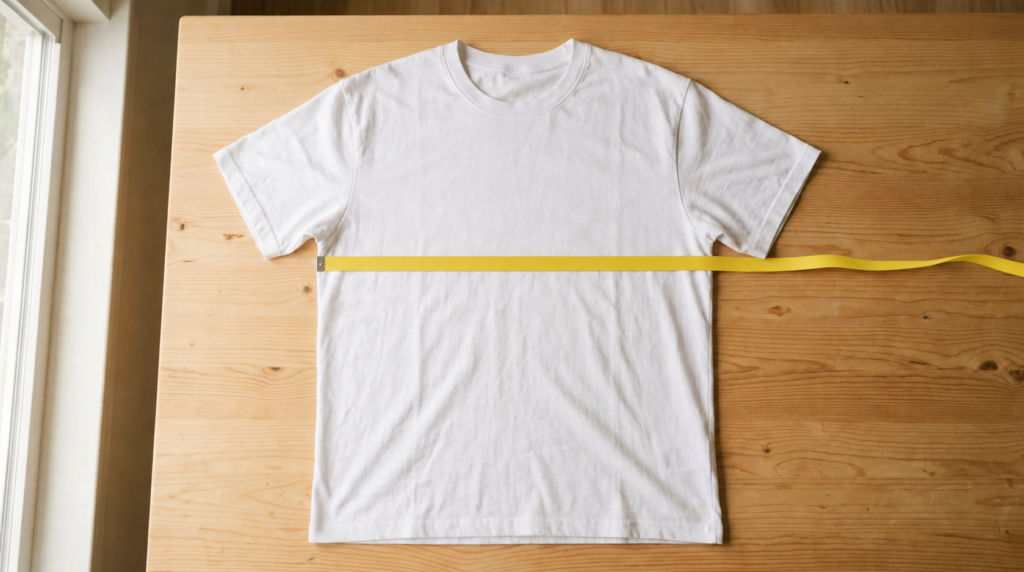
Garment chest width is measured laid flat across the chest from the lower armpit seam on one side to the lower armpit seam on the other side. Body length is measured from the highest point of the shoulder, right where the collar seam meets the shoulder line, straight down to the bottom hem. The table below lists the verified laid-flat measurements for the store’s unisex T-shirt from size Small through 5XL in both inches and centimeters, along with an approximate garment circumference calculated as twice the flat width:
| Size | Chest Width (Laid Flat) | Body Length (Shoulder to Hem) | Approx. Garment Chest Circumference (2 × Flat Width) |
|---|---|---|---|
| S | 18 in (45.7 cm) | 28 in (71.1 cm) | 36 in (91.4 cm) |
| M | 20 in (50.8 cm) | 29 in (73.7 cm) | 40 in (101.6 cm) |
| L | 22 in (55.9 cm) | 30 in (76.2 cm) | 44 in (111.8 cm) |
| XL | 24 in (61.0 cm) | 31 in (78.7 cm) | 48 in (121.9 cm) |
| 2XL | 26 in (66.0 cm) | 32 in (81.3 cm) | 52 in (132.1 cm) |
| 3XL | 28 in (71.1 cm) | 33 in (83.8 cm) | 56 in (142.2 cm) |
| 4XL | 30 in (76.2 cm) | 34 in (86.4 cm) | 60 in (152.4 cm) |
| 5XL | 32 in (81.3 cm) | 35 in (88.9 cm) | 64 in (162.6 cm) |
These circumference figures describe the garment, not the wearer’s body. The store’s size guide notes that garment measurements may vary by up to ±1 inch (2.5 cm). If a favorite T-shirt falls between two chart widths, compare its length as well and consider the recipient’s preferred amount of room before choosing a size.
Women’s Classic Tee Size Chart
The Women’s Classic Tee is listed as semi-fitted, with side seams and cap sleeves. Its flat width and length figures differ from the unisex chart, so compare the actual dimensions instead of matching letter sizes alone.
The table below provides the exact laid-flat dimensions for the Women’s Classic Tee from size Small through 3XL in both inches and centimeters, along with an approximate garment circumference calculated as twice the flat width:
| Size | Chest Width (Laid Flat) | Body Length (Shoulder to Hem) | Approx. Garment Chest Circumference (2 × Flat Width) |
|---|---|---|---|
| S | 17.25 in (43.8 cm) | 25.5 in (64.8 cm) | 34.5 in (87.6 cm) |
| M | 19.25 in (48.9 cm) | 26.0 in (66.0 cm) | 38.5 in (97.8 cm) |
| L | 21.25 in (54.0 cm) | 27.0 in (68.6 cm) | 42.5 in (108.0 cm) |
| XL | 23.25 in (59.1 cm) | 28.0 in (71.1 cm) | 46.5 in (118.1 cm) |
| 2XL | 25.25 in (64.1 cm) | 28.5 in (72.4 cm) | 50.5 in (128.3 cm) |
| 3XL | 27.25 in (69.2 cm) | 29.0 in (73.7 cm) | 54.5 in (138.4 cm) |
A Women’s Medium measures 19.25 inches across the chest and 26 inches in length; a Women’s 3XL measures 27.25 inches across and 29 inches in length. These are garment measurements, and the store’s size guide notes variation of up to ±1 inch (2.5 cm). The listed semi-fitted cut may feel different from the unisex classic fit even when flat chest widths are close.
Unisex vs. Women’s Fit: What Actually Changes
The store lists its unisex T-shirt as a classic fit and the Women’s Classic Tee as semi-fitted, with side seams and cap sleeves. Their size charts show how width and length differ. Use those listed details to compare the two styles; the same letter size does not guarantee the same garment dimensions.
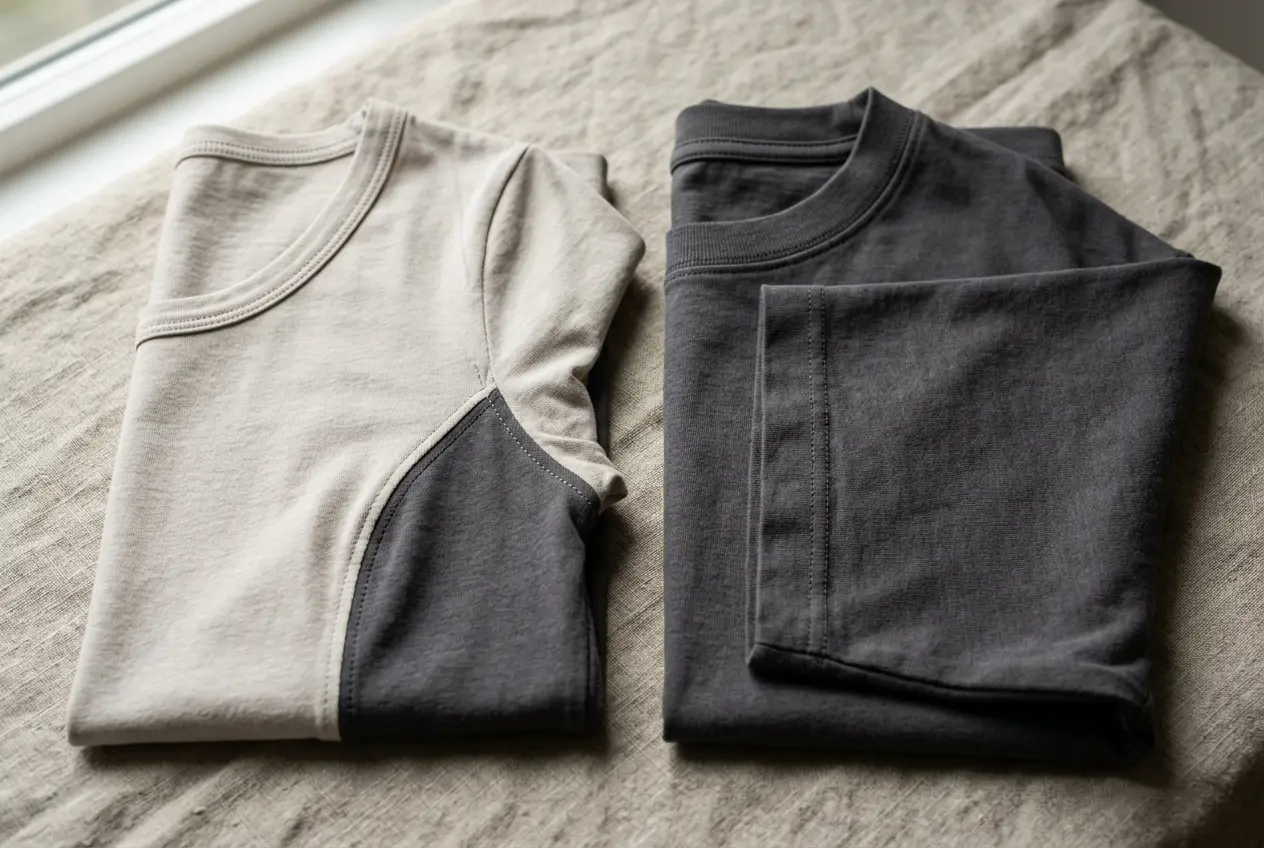
The store publishes separate measurements for its unisex T-shirt and Women’s Classic Tee. For a separate look at shirt choices beyond size, explore our related comparison guide. The published specifications and measurements show three useful differences:
- Listed fit: The unisex T-shirt is described as a classic fit. The Women’s Classic Tee is described as semi-fitted and has side seams. The size label alone does not tell you how either shirt will feel on a particular person.
- Sleeves: The store’s Women’s Classic Tee specification lists cap sleeves. Check the selected product style rather than assuming every women’s or unisex T-shirt uses the same sleeve construction.
- Garment length: The unisex chart lists 28 inches for Small through 35 inches for 5XL; the women’s chart lists 25.5 inches for Small through 29 inches for 3XL. Compare the exact sizes you are considering because the ranges cover different size runs.
Why “Size Down One” Doesn’t Always Work for Women
One of the most persistent sizing myths in online shopping is the generic advice that “women should always size down one size in unisex shirts.” While this advice may seem logical on the surface, comparing the actual flat garment measurements quickly reveals why it often leads to disappointing fits.
Let us look closely at the numbers between a women’s Medium and the corresponding unisex sizes:
- Women’s Medium Flat Width: 19.25 inches (38.5 inches total circumference)
- Unisex Medium Flat Width: 20.0 inches (40.0 inches total circumference)
- Unisex Small Flat Width: 18.0 inches (36.0 inches total circumference)
If a woman who normally wears a Women’s Medium buys a Unisex Medium, the shirt is only 0.75 inches wider laid flat (1.5 inches total around the full chest). That is 0.75 inches more width, but the preferred amount of room depends on the person and the fit of their existing shirt. However, if she follows the generic rule and sizes down to a Unisex Small, the shirt drops to 18 inches laid flat. That makes the unisex shirt 1.25 inches narrower across the chest (2.5 inches less circumference) than her usual women’s size.
A Unisex Small is 1.25 inches narrower laid flat than the Women’s Medium. For someone whose favorite shirt is close to the Women’s Medium measurements, that reduction may be unwanted. The Unisex Small is also 28 inches long, 2 inches longer than the Women’s Medium. Compare both dimensions rather than assuming a smaller letter size recreates the same fit.
Choosing the smaller unisex size can make sense when its flat width and length match a shirt the recipient already prefers. Keeping the same letter size can make sense for someone who wants more room. Neither choice works for everyone: start with garment measurements and the recipient’s fit preference.
For care, follow the store’s garment instructions: machine wash cold, inside out, with similar colors, then tumble dry low or hang dry. Avoid ironing directly on the print. For more tips, read our guide on how to wash graphic tees.
How to Choose a Size When the Shirt Is a Gift
Selecting the right t-shirt size for someone else can feel like an impossible puzzle when you want the gift to remain a complete surprise. You cannot simply ask for their chest measurement without giving away the surprise, yet guessing blindly based on someone’s height or build is notoriously unreliable. Two people of the same height and weight can have completely different body proportions, shoulder widths, and fit preferences.
Fortunately, you do not have to guess. Use these three discreet ways to gather a useful size reference without tipping off the recipient:
- Method 1: The Sneak Flat Measurement (Most Accurate): When your recipient is out of the house or occupied in another room, locate a casual t-shirt from their closet or laundry basket that you have seen them wear often. Lay the shirt completely flat on a smooth surface like a dining table or bed. Smooth out any wrinkles without pulling or stretching it. Using a tape measure, ruler, or measuring tape app, measure straight across the chest from the lower armpit seam on one side to the other. Match that exact flat width number against the Unisex T-Shirt Size Chart above. This measurement gives you a useful comparison with the chart, although the two styles may still fit differently.
- Method 2: The Tag Check (Fast and Discreet): If you cannot lay out a shirt with a measuring tape, quickly inspect the collar tag of a casual crewneck t-shirt they wear regularly on weekends. Check both the letter size and the brand cut. Note the brand and cut as well as the letter size; that label is a starting point, not a reliable cross-brand conversion. If the tag belongs to a fitted women’s brand, refer to our comparison breakdown: compare its flat measurements with the unisex chart before choosing a size.
- Method 3: The Housemate Inquiry (The Social Route): If you cannot access their wardrobe directly, reach out discreetly to a partner, parent, or roommate who lives with them. Housemates frequently help with laundry or fold clothing and know their typical t-shirt size without needing to ask awkward questions. Simply ask: “What size t-shirt does Alex usually wear for casual weekend shirts?”
If you are still between sizes, revisit the recipient’s favorite shirt and the length they prefer. A larger size offers more room, while a smaller size sits closer; neither is automatically the right gift. If you cannot check an existing shirt, a gift receipt or a discreet question about fit preference can reduce the guesswork.
Explore the T-Shirts Category
Browse current graphic designs from the T-Shirts collection.
 Funny Overstimulated Ransom Note
 Funny Men’s Interest Over
 Gulf of America Retro
 I’m Not Old I’m
Frequently Asked Questions
What size should I get in a unisex t-shirt?
Measure a t-shirt you already own that fits well laid flat across the chest from armpit to armpit, then match that measurement to the unisex size chart. If you fall between two sizes, choose the larger size for a relaxed fit or the smaller size for a closer fit.
How does unisex t-shirt sizing work?
For this store’s unisex T-shirt, the size guide lists a classic fit and garment widths and lengths measured flat. Compare those numbers with a T-shirt the recipient already likes; the Women’s Classic Tee is listed as semi-fitted with side seams and cap sleeves.
What is the size chart for unisex shirts?
For the store’s unisex T-shirt, garment chest widths laid flat are S (18 in), M (20 in), L (22 in), XL (24 in), 2XL (26 in), 3XL (28 in), 4XL (30 in), and 5XL (32 in), with body lengths ranging from 28 to 35 inches.
How do I know my unisex size if I usually wear women’s sizes?
Compare your favorite women’s tee’s flat chest width to the unisex chart. Do not automatically size down one letter: a women’s M is 19.25 inches wide, which is much closer to a unisex M (20 inches) than a unisex S (18 inches).
